

Views: 0 Author: Site Editor Publish Time: 2026-03-23 Origin: Site


Industrial pumping systems rarely rely on a single universal design. Engineers and plant operators often begin their search with a broad term such as horizontal centrifugal pump, but quickly realize that this category contains multiple variations built for different working environments. Each type of pump is designed to solve a particular fluid transfer challenge, whether it involves high pressure, corrosive chemicals, elevated temperature, or intermittent suction conditions. Shanghai JUSH Pump Manufacturing Co., Ltd., a professional pump manufacturer with more than fifteen years of experience in pump development and fluid control technology, produces several types of horizontal centrifugal pumps designed for industrial applications around the world. Understanding these types helps businesses select equipment that matches their process conditions and operational requirements more accurately.
Although many pumps share a similar external structure, several design factors determine how they perform in different industrial environments. These differences explain why manufacturers produce multiple pump types rather than a single standard model.
One of the main structural differences between centrifugal pumps is the number of stages. A stage refers to the number of impellers arranged within the pump to increase pressure. Pumps with a single impeller typically deliver moderate pressure and are suitable for general fluid transfer.
When higher pressure is required, multiple impellers are arranged in series within the pump casing. Each stage increases the pressure of the fluid as it moves through the pump. The number of stages directly influences the head that the pump can generate.
Pump materials play a critical role in determining where a pump can be used. Clean water applications may allow standard materials such as cast iron or stainless steel, but industrial processes often involve aggressive liquids.
Corrosive chemicals, acids, and oxidants require specialized materials that can resist chemical attack. Pump manufacturers therefore develop different pump models based on material compatibility with various fluids.
Another factor that distinguishes pump types is the specific operating duty. Pumps used for simple water circulation differ from pumps used in chemical processing or high-temperature thermal fluid systems.
Each operating environment introduces unique requirements related to sealing, temperature resistance, and structural durability. Understanding the intended duty helps engineers identify the most suitable pump type.
Among the many centrifugal pump designs, the single-stage horizontal pump is one of the most widely used in industry.
Single-stage pumps contain only one impeller and are designed for moderate pressure applications. These pumps are ideal for transferring liquids over relatively short distances or through systems with limited resistance.
Applications commonly include water supply, plant utility systems, cooling circulation, and general industrial fluid movement. Because these tasks do not require extremely high pressure, the single-stage design offers an efficient solution.
Utility systems in industrial plants often require pumps that operate continuously and reliably. Single-stage horizontal centrifugal pumps are well suited for these environments because their structure is straightforward and easy to maintain.
With fewer internal components than multistage designs, single-stage pumps often experience less mechanical complexity. This simplicity contributes to long operating life and predictable performance.
Operators often favor single-stage pumps because they are easier to inspect and maintain. Bearings, seals, and other components can be serviced without extensive disassembly.
This ease of maintenance helps reduce downtime and simplifies routine inspection procedures, making single-stage pumps a dependable choice for many everyday industrial tasks.
While single-stage pumps serve many applications, some processes require significantly higher pressure. In such cases, multistage centrifugal pumps become necessary.
Multistage pumps contain multiple impellers installed within a single casing. Each stage increases the pressure of the liquid before passing it to the next stage.
This configuration allows the pump to generate a much higher head compared to single-stage designs. As a result, multistage pumps are commonly used in systems that must overcome significant pipeline resistance or elevation changes.
Certain industrial processes require high-pressure fluid movement. Examples include boiler feed systems, high-pressure cleaning processes, and long-distance liquid transportation.
Multistage horizontal centrifugal pumps are well suited to these tasks because their design allows them to maintain stable pressure across complex piping networks.
Before installing a multistage pump, engineers typically evaluate the operating conditions carefully. Factors such as flow rate, pressure requirements, and fluid characteristics must be analyzed.
Although multistage pumps deliver higher pressure, they may also involve more complex maintenance requirements. Proper selection ensures that the pump performs efficiently without unnecessary mechanical stress.
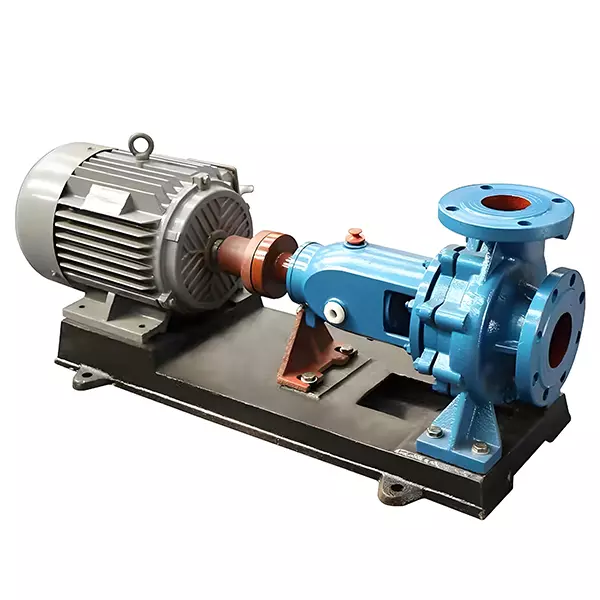
Many industrial processes involve liquids that may cause corrosion in ordinary pump materials. To address these challenges, manufacturers produce corrosion-resistant pump models.
Stainless steel centrifugal pumps are commonly used in applications where moderate corrosion resistance is required. Stainless steel offers durability and resistance to many chemicals and is widely used in food processing, pharmaceutical manufacturing, and water treatment systems.
Because stainless steel also provides good mechanical strength, it is suitable for environments where both cleanliness and durability are important.
Processes that involve strong acids or alkaline solutions require specialized pump materials. Standard metals may degrade quickly when exposed to these aggressive liquids.
Acid and alkali resistant pump designs incorporate materials that provide enhanced chemical resistance, allowing the pump to operate safely in demanding environments.
When dealing with chemical fluids, selecting the correct material is more important than the pump’s external appearance. The compatibility between the pump materials and the transported liquid directly affects service life and operational safety.
Proper material selection helps prevent corrosion, leakage, and premature equipment failure.
For highly aggressive chemical environments, fluoroplastic alloy pumps provide an effective solution.
Fluoroplastic pumps are designed to transport liquids that would quickly damage conventional materials. These pumps are commonly used in chemical production, electroplating systems, pickling lines, and other corrosive industrial processes.
The chemical resistance of fluoroplastic materials allows the pump to operate reliably even when handling strong acids or oxidizing agents.
Fluoroplastic alloys offer excellent resistance to chemical corrosion. This property allows the pump to maintain structural integrity even when exposed to harsh chemical environments.
As a result, fluoroplastic centrifugal pumps are frequently chosen for chemical transfer systems that require long-term durability.
Chemical applications often require advanced sealing systems to prevent leakage. Pumps designed for corrosive media must combine appropriate materials with reliable sealing structures.
These design considerations help maintain safe operation while protecting surrounding equipment from chemical exposure.
Certain industrial environments require specialized pump designs that address unique operational challenges.
Hot oil systems operate at elevated temperatures, often exceeding the limits of standard pump materials. Pumps designed for thermal fluid transfer must incorporate components capable of withstanding high temperatures.
Hot oil pumps typically include specialized seals and materials that prevent thermal expansion from damaging internal components.
In some installations, the pump cannot rely on a constant liquid supply at the suction inlet. Self-priming pumps are designed to remove air from the suction line and draw liquid into the pump automatically.
This capability makes self-priming pumps useful in applications where the pump may start with an empty suction line.
Specialized pump designs such as hot oil pumps or self-priming pumps are developed to solve particular operational challenges. While they may not be necessary for every system, they provide valuable solutions when specific conditions demand them.
The following table provides a simplified overview of different horizontal centrifugal pump types and their typical uses.
Pump Type | Best For | Main Strength | Typical Concern |
Single-stage horizontal | General transfer | Simple design | Limited pressure range |
Multistage horizontal | High-pressure duty | Higher head capability | More complex structure |
Stainless steel horizontal | Moderate chemical liquids | Corrosion resistance | Must match material to fluid |
Acid/alkali resistant horizontal | Chemical processing | Improved chemical compatibility | Requires process data |
Fluoroplastic alloy horizontal | Strong corrosive media | Excellent corrosion resistance | Specific application design |
Hot oil horizontal | Thermal fluid transfer | Handles high temperature | Temperature-related design factors |
Self-priming horizontal | Intermittent suction systems | Easy start-up | Not necessary in all systems |
Selecting the right pump type requires careful evaluation of several technical and operational factors.
The characteristics of the fluid being transported are often the most important factor. Corrosive chemicals, high temperatures, or suspended solids can significantly influence pump selection.
By understanding the chemical and physical properties of the fluid, engineers can identify pump materials and designs that ensure reliable operation.
Hydraulic requirements must also be evaluated. Flow rate and pressure determine how much work the pump must perform. Temperature conditions may influence the choice of materials and sealing systems.
Matching these factors with the appropriate pump type helps ensure efficient performance.
Equipment that is easy to maintain often provides better long-term value. Pumps with accessible components and durable materials reduce maintenance frequency and operating costs.
Considering life-cycle performance rather than only the initial purchase cost helps businesses make more sustainable equipment decisions.
Understanding pump types is essential for selecting equipment that meets real operating needs. A horizontal centrifugal pump is not a single universal design but a category that includes multiple configurations for different industrial environments. Shanghai JUSH Pump Manufacturing Co., Ltd. continues to develop centrifugal pump solutions that support chemical processing, industrial fluid transfer, and specialized applications around the world. With over fifteen years of manufacturing experience and an international customer base across the Middle East, Southeast Asia, Europe, and the United States, JUSH Pump provides reliable pumping equipment designed for demanding industrial conditions. Businesses seeking dependable fluid handling equipment can contact us to discuss application requirements and explore suitable pump models. Our engineering team can help identify the most appropriate industrial centrifugal pump configuration for your process system.
The main types include single-stage pumps, multistage pumps, stainless steel pumps, acid-resistant pumps, fluoroplastic pumps, hot oil pumps, and self-priming pumps.
For corrosive chemicals, fluoroplastic alloy pumps or specialized chemical centrifugal pumps are commonly used because they offer excellent resistance to chemical corrosion.
Multistage pumps are used when the system requires higher pressure or when fluid must travel through long pipelines or elevated systems.
Yes. Single-stage pumps remain one of the most common designs for general industrial fluid transfer because they are simple, reliable, and easy to maintain.